How can cooperation between the water sector and the agricultural sector be improved to prevent contamination of drinking water? The KoWaLa project is investigating how preventive water protection can be strengthened through the greening of agriculture.
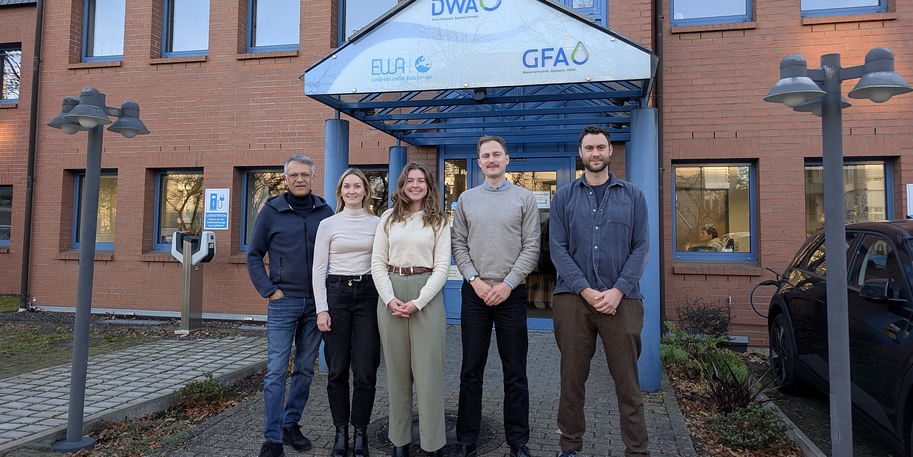
Clean drinking water starts with farming practices: where pollutants do not enter the water in the first place, less treatment is required. Against this backdrop, the ‘KoWaLa’ project is investigating how cooperation between the water sector and the agricultural sector can be improved, with the aim of making agriculture more environmentally friendly to ensure precautionary water protection. On 10 November 2026, the project partners met for the kick-off event at the DWA headquarters in Hennef.
The focus is on water protection in the catchment and spring areas of water suppliers and beverage manufacturers. The project is examining ecologised agriculture, which encompasses both certified organic farming and water-conserving measures implemented by conventional farms. The project will initially assess the current state of existing collaborations through surveys of water suppliers, beverage manufacturers and agricultural holdings. Building on this, recommendations for action will be developed and discussed with stakeholders from the water and agricultural sectors, the beverage industry, consultancy and politics. A project advisory board will support the research.
Three partners are pooling their expertise: The DWA coordinates the consortium and is responsible for dissemination and knowledge transfer. FiBL develops interview guides and questionnaires and carries out qualitative and quantitative analysis of the data. inter 3 conducts the surveys and, using constellation analysis, formulates recommendations for action by analysing current stakeholders, relationships and problem areas, identifying strategic starting points and creating target constellations.
The project is funded by the Federal Ministry of Agriculture, Food and Home Affairs (BMLEH) as part of the Federal Programme for Organic Farming (BÖL); the project is managed by the Federal Office for Agriculture and Food (BLE).