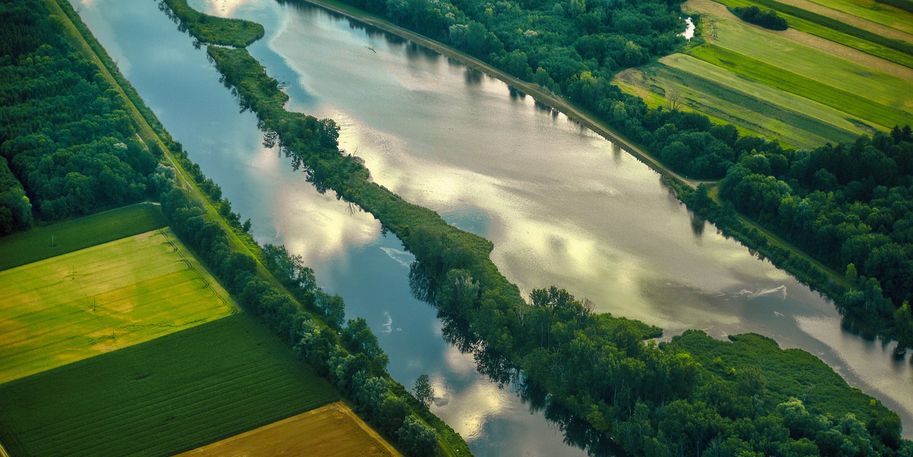
Drinking water is best protected where it originates: in catchment areas and spring areas. Partnerships between water suppliers and agricultural businesses are regarded as a tried-and-tested model for this; in North Rhine-Westphalia, for example, they have been in place since the late 1980s. Organic farming can make a particular contribution here, as it does not use synthetic chemical fertilisers or pesticides. However, there has as yet been no systematic documentation of what such partnerships look like in Germany today, where they succeed and where they fail.
Assessing the current state of partnerships
KoWaLa is closing this knowledge gap with a nationwide analysis of the current situation and existing knowledge. The first step involves reviewing existing initi-atives through research and interviews. Building on this, water suppliers, bever-age manufacturers and agricultural businesses across the country will be sur-veyed online. They will report on their experiences and objectives, as well as their motivations, obstacles and incentives for future involvement in water-conserving and organic measures. Areas within catchment and spring catchment areas that are suitable for such measures will also be identified.
Understanding potential and barriers
The results of the surveys and interviews are evaluated quantitatively and quali-tatively. Using a constellation analysis, the project partners highlight which stakeholders, framework conditions and relationships currently shape the im-plementation of water-conservation measures, and how these constellations can evolve towards resource- and water-efficient land management. A project advi-sory board, as well as focus groups and workshops involving stakeholders from the water sector, the drinks industry, agriculture and consultancy, support and validate this process.
Recommendations for action and knowledge transfer
On this basis, practical recommendations for action are developed for the water sector, the drinks industry, agriculture and policymakers, along with guidance on research and funding needs, which are presented in various formats. KoWaLa is thus contributing to the Bio-Strategy 2030 and the National Water Strategy. in-ter 3 is responsible within the project for the online surveys, the stakeholder analysis and the development of recommendations for action, and is involved in the evaluation and dissemination of results. The DWA coordinates the consorti-um, whilst FiBL Germany is responsible for research, questionnaire development and evaluation.
The project is funded by the Federal Ministry of Agriculture, Food and Rural Affairs following a resolution by the German Bundestag as part of the Federal Pro-gramme for Organic Farming.