Extreme weather, cyber-attacks and the failure of critical infrastructure are increasingly occurring not one after the other, but simultaneously – and are tying up the same limited human and financial resources within a local authority. To ensure that regions remain capable of taking action in such situations, binding networks are needed comprising local authorities, regional planning bodies, civil protection agencies and utility and waste management providers – established before an emergency arises. This is precisely what five pilot regions have been testing over the past three years as part of the ‘Resilient Regions’ project, and they have been sharing their experiences with eight new partner regions since the summer of 2026.
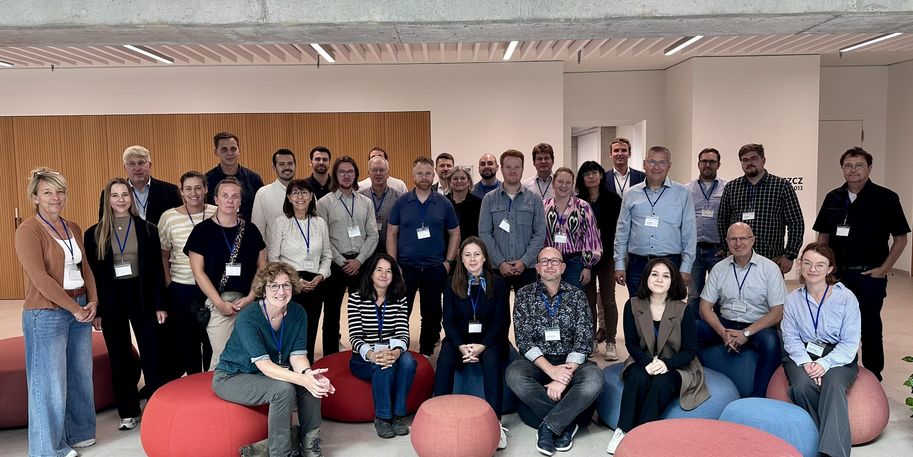
On 16 and 17 September 2026, all 13 regions came together in Mannheim for this purpose – with an evening event organised by the Rhine-Neckar Regional Association and a one-and-a-half-day programme at the Technical Town Hall. Within the project, we are responsible for designing the knowledge transfer between the regions and, together with agl and plan + risk consult, provide scientific support for the project, which is overseen by the BBSR: through larger-scale exchange sessions and topic-specific small groups, we bring together the representatives of the regions, run training sessions and offer advice on individual issues.
In the morning, the transfer regions presented their approaches to four key topics – network building with KRITIS stakeholders, raising awareness among the public and businesses, establishing a crisis-resilient administration, and resilience in spatial planning – whilst the model regions provided practical insights based on their own experience. In the afternoon, specific tools were put into direct practice: simulation exercises and table-top exercises, a resilience advisory training session, and KRITIS analyses.
To ensure that the insights have an impact beyond the participating regions, the federal government has compiled the results of the first project phase in the digital toolbox ‘Resilient Spatial Development’ – which is publicly accessible and explicitly intended for regions that are still in the early stages of their crisis preparedness.
![[Translate to English:] Porträt von Dr. Susanne Schön](/fileadmin/_processed_/e/4/csm_21c962_ls_weiss-50_6f400480b9.jpg)